Stop being the one who remembers.
Most small teams have one person who knows when the key was last rotated and whose IP that is. OpsMinder takes that job with runbooks, deploy logs and an IP and SSH key registry, and tells the team when something is due.


Small ops chores pile up quietly.
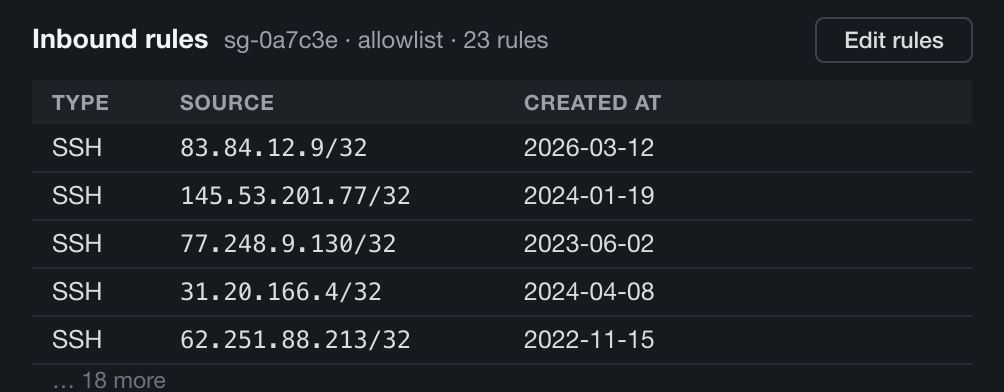
The allowlist keeps growing
Someone's home IP from two laptops ago. A contractor who finished last spring. Removing a rule you can't place feels risky, so it stays.
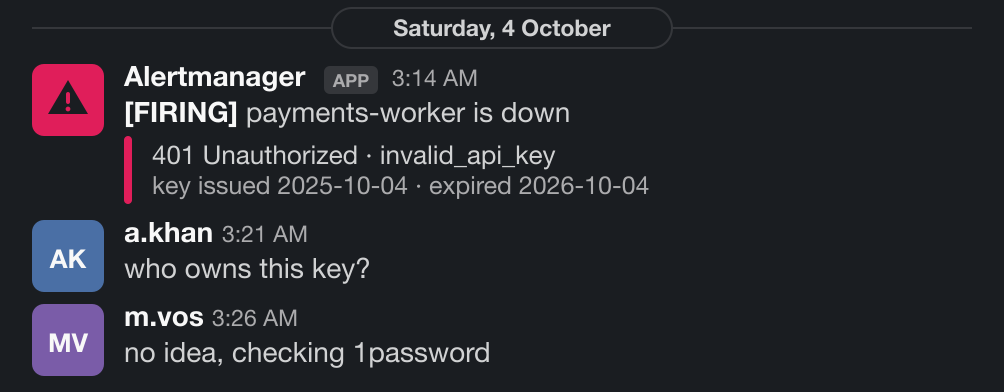
The key that expired on a Saturday
It was issued a year ago by someone who meant to set a reminder. Finding out who could rotate it took an hour.
Keeps the list current, and reminds the team when something is due.
Three jobs. Each has an owner, a date and a record, and each can send a message to Slack, Teams, a webhook or email.
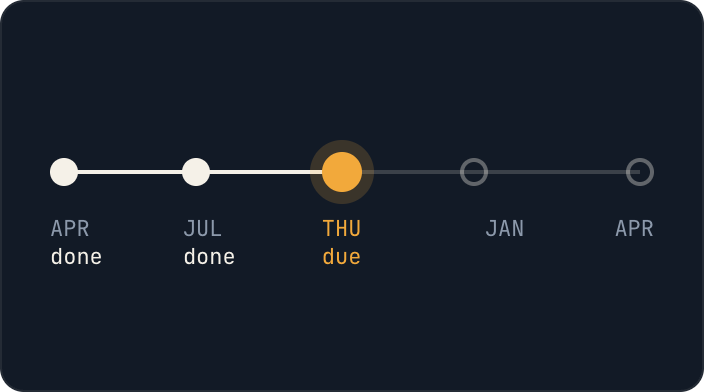
Runbook tracking
Key rotations, backup drills, server updates and other recurring chores. Each has an owner and an interval. The owner gets a reminder a week before it's due, and the team sees when it was last done.
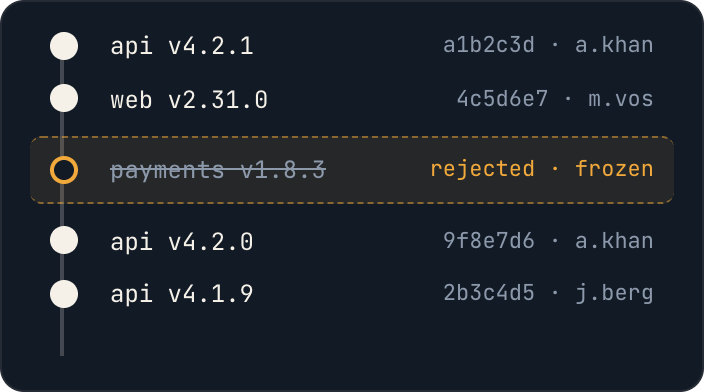
Deploy logs
Your pipeline sends the repo and commit hash on each release. OpsMinder pulls the commits from GitHub or GitLab and keeps a change log per environment. Start a freeze and releases are rejected until it lifts.
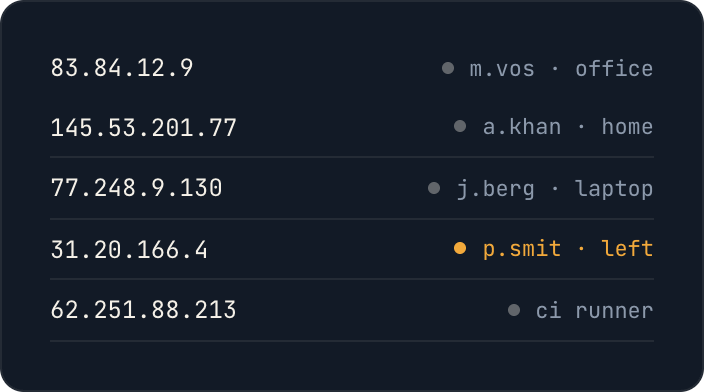
IP address registry
Each IP and key has an owner and a reason. When someone leaves or changes machines, their entries are listed, so you know which firewall rules to remove.
One euro per seat a month.
Everything is included on both plans. Billed yearly.
A team of 12 pays €144.
Two seats or more. Swap developers in and out of seats whenever you like.
Get startedThe first ten minutes.
Paste your current IP list or upload the spreadsheet. Add the people on the team.
Slack, Teams, a webhook or email. One channel for the team is enough to begin.
Pick the chore you most often forget, set an interval and an owner. The first reminder is scheduled.
A list and a reminder. Nothing in your critical path.
OpsMinder is not a security product and does not sit between people and systems. It keeps the record and sends the message.
Start with the chore you forget most.
Free for one developer. €1 per seat a month after that.